 Mon - Sat 8:00 - 6:30, Sunday - CLOSEDMon - Sat 8:00 - 6:30, Sunday - CLOSED

 Send Email
 Send Inquiry
Soft Drink Packaging Plant
Price 1650000 INR/ Unit
MOQ : 01 Unit
Soft Drink Packaging Plant Trade Information
- Minimum Order Quantity
- 01 Unit
- FOB Port
- MUNDRA PORT
- Payment Terms
- Cash in Advance (CID), Cheque, Cash Advance (CA)
- Supply Ability
- 01 Unit Per Month
- Delivery Time
- 01 Months
- Sample Policy
- Contact us for information regarding our sample policy
- Packaging Details
- WOODEN BOX
- Main Export Market(s)
- Africa, Asia
- Main Domestic Market
- All India
- Certifications
- ISO
Soft Drink Packaging Plant About
Due to our proficiency of this domain, we are offering a huge series of Soft Drink Packaging Plant. It is equipped in a modern state of infrastructure is to set up and maintain in a reliable manner. It is used to bottle carbonated beverage such as Pepsi, Sprite and other cold drinks. This plant is easy to adjust its capping and seal in a safer manner. Soft Drink Packaging Plant serves as a protective measure that keeps the soft drink fresh.
Automatic Pepecee Cola Packaging Machine
- Digital Gravity Filling and Screw Capping Machine with Cap Feeder, In-feed And Exit Conveyor for PET Bottle.
- Machine output capacity: - start from 20 bottle /min. filling capacity to 160 bottle/min.
Specification:
|
Application |
Beverages Packaging |
|
Frequency |
60 Hz |
|
Type |
Making Machine |
|
Voltage |
380 V |
|
Container Type |
Bottle |
|
Automation Grade |
Automatic |
|
Filling Material |
Soda |
|
Warranty |
1 year |
|
Packaging Type |
Bottle,Cans |
|
Automatic Grade |
Automatic |
|
Driven Type |
Electric |
Advanced Automation for Streamlined Operation
Equipped with state-of-the-art computerized controls and an intuitive HMI, this packaging plant ensures precise, consistent performance with minimal human intervention. Its automatic grade streamlines the packaging process, increasing productivity and reducing errors for soft drink producers of various scales.
Versatile Capacity and Robust Build
With the ability to package from 24 to 300 pieces per minute and a broad power capacity, the plant caters to different production needs. Its stainless steel construction guarantees long-term durability and corrosion resistance, making it suitable for rigorous industrial environments.
Comprehensive Support and Warranty
Each plant includes a one-year warranty for worry-free operation. Located in India, we provide comprehensive support to distributors, exporters, manufacturers, and suppliers, ensuring seamless installation and maintenance throughout the product's life cycle.
FAQ's of Soft Drink Packaging Plant:
Q: How does the automatic packaging plant improve efficiency in soft drink production?
A: The plant automates the entire packaging process using advanced computerized controls and a Human Machine Interface, which reduces manual labor and increases output speed. This results in higher production capacity and consistent packaging quality.Q: What is the typical process flow in this soft drink packaging plant?
A: The process begins with empty containers being fed into the machine, followed by filling, sealing, labeling, and final packaging-all managed automatically. The integrated control system ensures accurate and synchronized operations throughout the process.Q: When should regular maintenance be performed on the plant?
A: Routine maintenance is recommended on a monthly basis or as specified in the user manual. Regular checks help maintain optimal performance, prevent unexpected downtimes, and ensure the one-year warranty remains valid.Q: Where can this soft drink packaging plant be installed?
A: The plant is suitable for installation in small, medium, or large-scale beverage manufacturing facilities in India or for export globally, provided there is access to a 380-415 Volt electric connection and adequate floor space.Q: What benefits does the stainless steel construction offer?
A: Stainless steel provides excellent durability, corrosion resistance, and ease of cleaning. This makes the plant ideal for food and beverage applications, ensuring hygiene and longevity in demanding environments.Q: How user-friendly is the control system for operators?
A: The machine features a Human Machine Interface, designed for straightforward operation. Operators can easily monitor production, adjust parameters, and diagnose issues from a central touchscreen panel, minimizing training requirements.Q: What advantages does computerized automation bring to packaging?
A: Computerized automation ensures precise control over each stage of the packaging process, enhances reliability, and allows for rapid adjustments to production parameters. This results in greater flexibility and reduced operational errors.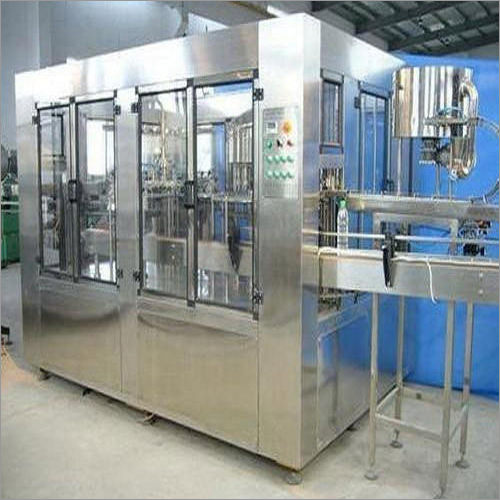
Tell us about your requirement

Price:
Quantity
Select Unit
- 50
- 100
- 200
- 250
- 500
- 1000+
Additional detail
Mobile number
Email

More Products in Soft Drink Plant Category
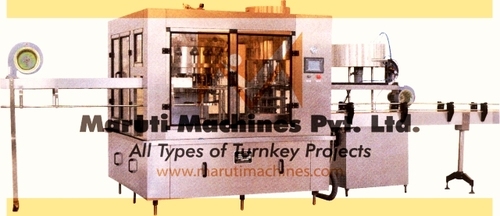
8 Head Filling Machine
Price 1250000 INR / Plant
Minimum Order Quantity : 01 Plant
Drive Type : Electric
Material : Stainless Steel
Automatic Grade : Automatic
Computerized : Yes
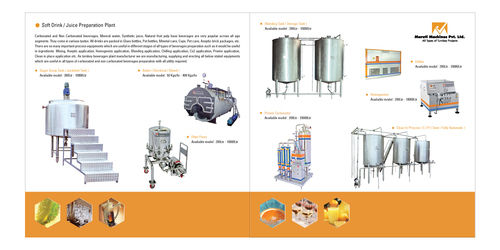
CSD plant
Price 400000 INR / Plant
Minimum Order Quantity : 01 Plant
Drive Type : Electric
Material : Stainless Steel (SS 304/316)
Automatic Grade : Automatic
Computerized : Yes
Soft Drink Plant
Minimum Order Quantity : 1 Plant
Drive Type : Electric
Material : Stainless Steel
Automatic Grade : Automatic
Computerized : No


|


Contact Details

- Plot No.:95, Road No. 8, GIDC, Kathwada,Ahmedabad - 382430, Gujarat, India
- Phone : 08045478469
MARUTI MACHINES PVT. LTD.
GST : 24AAGCM2559K1Z9

- Mr Haresh Patel (CEO)
- Mobile : 08045478469
- Send Inquiry
 Send Inquiry
 Send Inquiry
 Send SMS
 Call Me Free
MARUTI AUTO-MAC ENGINEERS
All Rights Reserved.(Terms of Use)
Developed and Managed by Infocom Network Private Limited.
Developed and Managed by Infocom Network Private Limited.


 English
 Spanish
 French
 German
 Italian
 Chinese (Simplified)
 Japanese
 Korean
 Arabic
 Portuguese